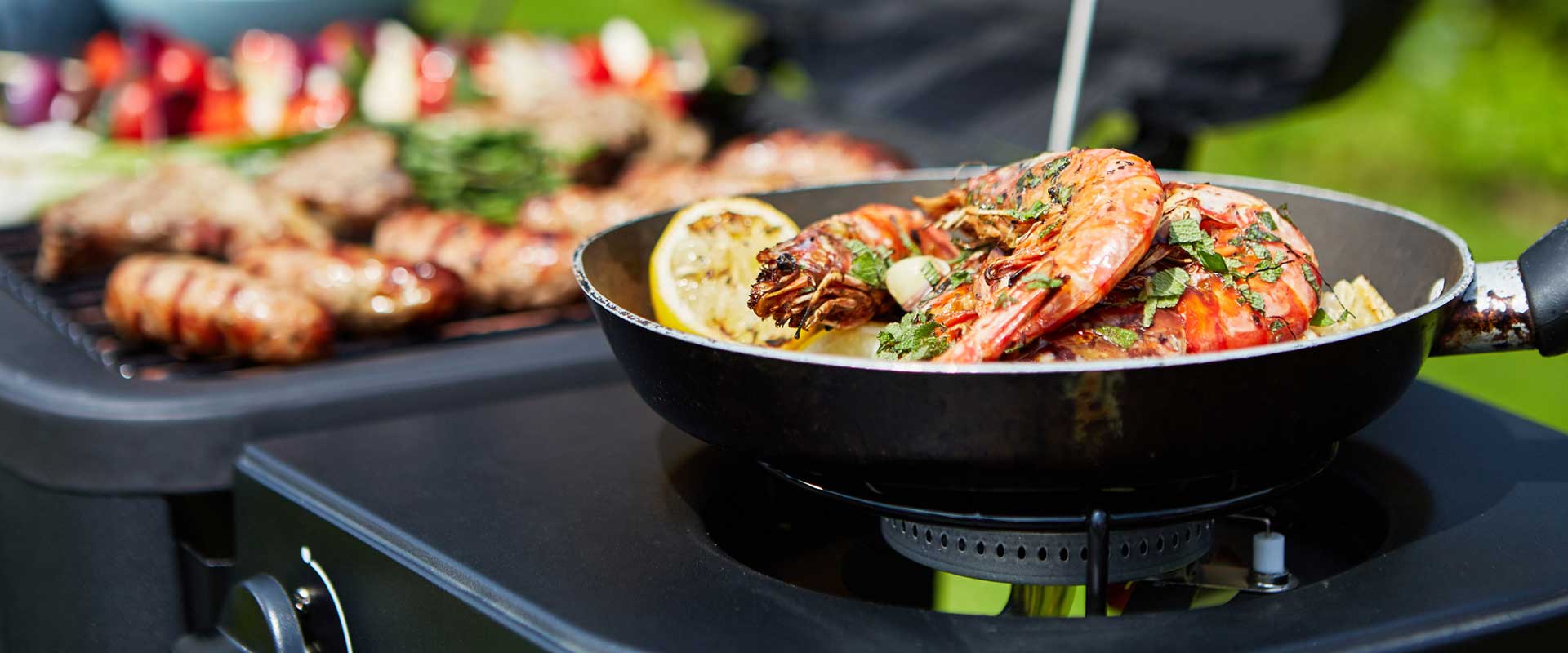
Summer is the perfect time to start grilling with skewers. Not only do they offer easy serving for busy garden parties, but they also help with the retention of natural flavours and keep everything cooking consistently.
So why not level up your barbecue game? If you want extra flavour, optimal crispness and even cooking, here’s all you need to know to get started.
Why should you start using skewers on the grill?
There are plenty of benefits to using skewers on the BBQ, from extra flavour to easy serving.
Skewers are self-basting
Rotating meat on skewers allows the natural fats to flow through and around the meat, so it bastes in its own juices.
This leaves you with meat that is tender and even more succulent than usual. Clean-up is even made easier as any excess fat collects in the drip pan.
Skewers simplify slow roasting
Turning meat on a skewer, slowly roasts it. This means less moisture is lost, keeping the meat tender and preventing a dry taste.
There’s also less need for high-calorie seasoning, sauces and salt, as the slow-roasting process retains more natural flavour.
Skewers help with even cooking
Rotating the food on skewers makes sure that it’s cooked evenly. All angles are regularly exposed to the heat, achieving a perfect, consistent finish.
Outside crispiness
For poultry in particular, the rotating motion of skewer cooking combined with the positioning over the fire adds an even crisp and browning to the skin, without charring.
Using wood chips on your barbecue’s fire adds even more smokiness to your skewers.
Easy serving
Skewers aren’t only great when on the grill, they’re great eating utensils too. Especially if you’re cooking for a big group, skewers keep serving easy and low fuss. Meaning everyone gets their food piping hot and clean-up is made easier!
Which skewers to use for grilling on a barbecue?
Wooden and metal skewers are both great for grilling on the barbecue, to help you decide which type you need, here’s a run-down of their different qualities:
Reasons to use metal skewers for grilling
- Suitable for heavier cuts of meat
- Can withstand intense heat and slow cooking
- Reusable
- Conduct heat
- Cook faster
Reasons to use wood skewers for grilling
- Single use
- Easy serving
- Must be soaked in water for at least 30 minutes before grilling, to prevent burning
Choosing the right ingredients
Serving tasty skewers starts with the right ingredients. Preparation is key, and different ingredients need to be prepared in different ways:
Beef skewers
Sirloin, ribeye or rump all taste great cooked on a skewer anyway, but coat them in sauce like our teriyaki beef skewers and you’re on to a winner. Beef is rich in flavour and is delicious cut into cubes and stacked with some chargrilled veggies.
Lamb skewers
Different lamb skewer recipes call for different cuts of lamp with leg being leaner and sweeter, while shoulder is richer and more flavourful. Shoulder is better for slow roasting on a spit. Whereas legs cook quickly and can easily dry out, so it’s best to marinate them.
Chicken skewers
From shish kebabs to grilled satay skewers, chicken meat is great for skewering. Chicken thigh and wing are the best for barbecuing because of their higher natural fats which keep them juicier and less likely to dry out. Whether its a chick
Skewered sausages
Barbecuing sausages gives them an intense smokiness which works with their snappy skin. They’re great on skewers because they’re prone to flare-ups, but skewers give them a more even cook.
Vegetable skewers
Whether you’re cooking mixed skewers or serving a full vegetarian option, par-cooking harder vegetables before the main event is a good idea. Potatoes and carrots can take a while to warm up so some prep makes sure everything finishes at the same time.
Skewered sweet treats
Skewers aren’t only great for the savoury. Grilled fruit and marshmallows are perfect for toasting over the flame. Chop up some summer fruits and let your guests build their own dessert.
How to grill with skewers?
Marinade
Chop and prepare the meat or vegetables of choice, then leave them to marinate for their relative time:
- Seafood should be marinated for up to 30 minutes
- Vegetables should marinate for 15 minutes – 2 hours
- Chicken and tender meat cuts need to marinate for 2 – 6 hours
- Pork, lamb and tougher cuts should marinate for 4 – 24 hours
Prepare your skewers
If you’ve chosen wooden skewers, make sure you soak them in water for 30 minutes before use. This prevents them from burning. Metal skewers are good to go right away.
Avoid packing the skewers too tightly or combining fast and slow cooking items on the same skewer, like shrimp or soft vegetables with thicker cuts of meat and dense vegetables. This makes sure everything is cooked to perfection.
Grill to perfection
- Pre-heat the grill to a medium heat. If using a charcoal grill, pile more coals on one side to create a ‘two-zone’ cooking area. This gives you an indirect heat zone to move skewers to if anything start cooking too quickly.
- Use olive or vegetable oil to lubricate the grill gates, to prevent sticking.
- Place the skewers directly over the heat and flip every 2-3 minutes.
Serve
Use a meat thermometer to check all cooked meat is at a safe internal temperature:
- Chicken and turkey – 75°C (165°F)
- Sausages – 75°C (165°F)
- Fish – 50°C – 60°C (122°F – 140°F)
- Pork – 63°C – 71°C (145°F – 160°F)
- Beef – rare (50°C), medium rare (54°C), medium (57°C), medium well (63°C), well done (68°C)
Once at the correct temperature, move the cooked skewers onto a platter and loosely cover with aluminium foil. Leave them to rest for 5 minutes prior to serving. This rest time gives the juices time to redistribute.
Final thoughts
Grilling with skewers is a great way to switch up your typical barbecue method, offering flavour, juicy tenderness and even cooking.
At Outback, we have all the barbecuing essentials to get you grilling great food, including a selection of premium skewers. Choose between metal or wood, or both, and get your grill fired up.